
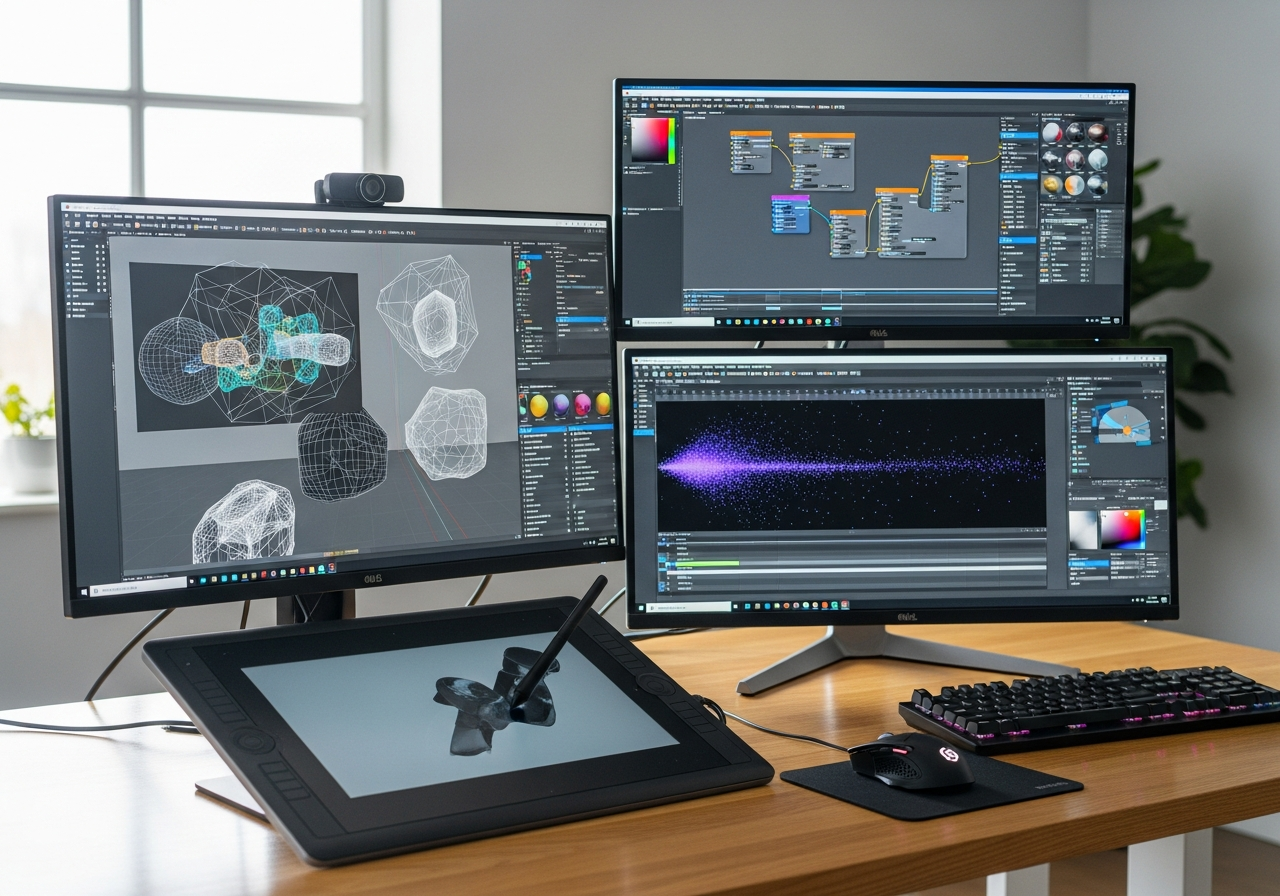
Smart VFX students across Canada can save thousands annually by understanding subscription costs before choosing their program. While VanArts, Seneca, Sheridan, and VCC offer excellent visual effects training, their approach to software licensing varies dramatically—potentially adding $1,000-$5,000 to your annual education budget. Subscriptions now dominate non-tuition costs for VFX students, making strategic school selection crucial for your wallet.
The main software powering professional VFX work—Houdini, Maya, Nuke, and Substance—carries hefty commercial price tags, but student benefits vary significantly by institution. Some schools provide free commercial licenses worth thousands, while others expect students to purchase their own subscriptions at reduced rates.
Why Subscriptions Matter for VFX Students
Software subscriptions typically represent 70-80% of technology costs for VFX students, far exceeding hardware investments in most cases. Beyond basic modeling and animation software, students need access to cloud rendering services, specialized plugins, and industry-standard compositing tools that can quickly accumulate substantial monthly fees. The subscription model has fundamentally shifted educational budgeting, making ongoing software access a primary concern rather than one-time purchases.
Cloud rendering alone can cost students $200-500 per semester during intensive project periods, while plugin collections from companies like Red Giant or Boris FX add another layer of recurring expenses. Understanding these costs upfront allows students to budget effectively and choose programs that minimize out-of-pocket software expenses.
The modern VFX pipeline demands proficiency across multiple software packages, making comprehensive access essential rather than optional for career preparation. Students who lack access to industry-standard tools often struggle in job interviews and portfolio reviews, making subscription investments a necessity rather than luxury.
Annual Cost Impact Beyond Tuition
Conservative estimates place annual software subscription costs between $1,000-$5,000 for VFX students, depending on program requirements and institutional partnerships. This represents 10-25% of total program costs at most Canadian institutions, making it a significant factor in educational planning. Students pursuing advanced specializations like effects simulation or high-end compositing face costs at the upper end of this range.
Job readiness directly correlates with software proficiency, making subscription investments essential for career success. Employers expect graduates to demonstrate competency across industry-standard tools, not student versions with limited functionality or watermarked output.
Key Software Providers for VFX
The VFX industry relies on several key software providers, each offering different student pricing structures and educational benefits. Understanding these providers and their licensing models helps students make informed decisions about their educational investments.
- SideFX (Houdini) – Industry-leading procedural animation and effects software with free apprentice licenses and educational discounts
- Autodesk (Maya, 3ds Max) – Comprehensive 3D modeling and animation suite with free student licenses for enrolled students
- Foundry (Nuke, Mari) – Professional compositing and texture painting tools with educational pricing and node-locked licenses
- Adobe (After Effects, Substance Suite) – Motion graphics and texturing tools with Creative Cloud educational discounts
- Boris FX – Plugin collections and specialized effects tools with exceptional student pricing including $5 annual licenses
- Chaos Group (V-Ray) – Rendering solutions with educational licenses and cloud rendering credits
VanArts VFX Program Subscriptions
VanArts stands out among Canadian VFX programs by providing students with significant software licensing advantages, particularly their partnership with SideFX for Houdini access. The school’s approach to software licensing reduces student costs while ensuring access to professional-grade tools throughout the program duration.
The institution’s Boris FX partnership provides additional value through discounted plugin access, giving students exposure to industry-standard effects tools without the typical commercial pricing barriers.
| Software | Commercial Price/Yr | Student Price | Included in Tuition? | Notes |
|---|---|---|---|---|
| Houdini | $1,995 CAD | Free | Yes | Commercial license provided |
| Maya | $2,315 CAD | Free | Student license | Educational version |
| Nuke | $6,900 CAD | $50 | Student cost | Non-commercial license |
| Boris FX Suite | $1,695 CAD | $5 | Student cost | Full plugin collection |
| Adobe Creative Cloud | $792 CAD | $264 | Student cost | Complete suite access |
| V-Ray | $470 CAD | Free | Educational | Student version |
Free License Perks at VanArts
The standout benefit at VanArts is their provision of full commercial Houdini licenses to students, representing a $2,000 annual value that significantly reduces total program costs. Unlike educational versions, these commercial licenses allow students to create portfolio work and freelance projects without restrictions, providing immediate professional opportunities.
This commercial license access extends beyond graduation for a limited period, giving new graduates a competitive advantage when entering the job market. The unrestricted nature of these licenses means students can begin building professional networks and taking on paid work while still in school.
Seneca Polytechnic VFX Costs
Seneca’s approach to VFX software licensing follows a more traditional educational model, with students primarily accessing software through discounted student licenses rather than full commercial versions. While this approach keeps direct costs manageable, students should budget for several key software subscriptions throughout their program duration.
| Software | Est. Student Sub/Yr | Books/Supplies Add-On | Total Tech Cost/Semester |
|---|---|---|---|
| Maya (Student) | Free | $200 | $200 |
| Houdini Indie | $335 | $100 | $267 |
| Nuke Non-Commercial | $50 | $150 | $125 |
| Adobe CC Student | $264 | $75 | $207 |
| Rendering Credits | $300 | $0 | $150 |
Ancillary Fees Breakdown
- Calculate total software subscription costs by multiplying annual rates by program duration in years
- Add estimated cloud rendering costs based on project complexity and deadline requirements
- Include plugin and add-on costs for specialized tools not covered in base subscriptions
- Factor in potential upgrade costs for professional licenses upon graduation
- Account for extended license periods during job searching after program completion
Required Tools List
Seneca students primarily rely on Maya student editions for 3D modeling and animation work, supplemented by Nuke student licenses for compositing projects. The program emphasizes industry-standard workflows while keeping software costs manageable through educational licensing agreements.
Sheridan College Visual Effects Subs
Sheridan’s premium tuition structure reflects their comprehensive facilities and industry connections, but software licensing costs remain largely separate from tuition fees. Students should expect to invest $1,000-1,500 annually in software subscriptions, with Maya being the notable exception through free educational licensing.
The college’s high-end curriculum demands professional-grade tools, making subscription investments necessary for keeping pace with coursework expectations. While initial costs appear substantial, Sheridan’s industry reputation often translates to higher starting salaries that can offset educational expenses more quickly than other programs.
Subscription Add-Ons to Tuition
| Category | Cost Range | Alternatives |
|---|---|---|
| Core Software Bundle | $800-1,200/yr | Lab access only |
| Cloud Rendering | $300-600/semester | Local rendering queues |
| Plugin Collections | $200-400/yr | Open source alternatives |
| Portfolio Tools | $150-300/yr | Free web platforms |
| Storage Solutions | $120-240/yr | Local storage upgrade |
VCC and Other Programs
Vancouver Community College and other regional programs across Canada offer cost-effective alternatives to premium institutions, though students typically face additional subscription costs that can offset tuition savings. Programs at Red Deer College, NAIT Edmonton, and similar institutions emphasize practical skills while requiring students to manage their own software licensing.
| Institution | Key Software | Student Cost/Yr | Duration Impact |
|---|---|---|---|
| VCC | Maya, After Effects | $400-600 | 2-year program |
| Red Deer College | Maya, Houdini Indie | $500-800 | 1-year certificate |
| NAIT Edmonton | Autodesk Suite | $300-500 | 2-year diploma |
| SAIT Calgary | Maya, Nuke | $600-900 | 2-year program |
| Confederation College | Adobe CC, Maya | $350-550 | 1-year intensive |
| Algonquin College | Autodesk Suite | $400-700 | 3-year program |
| New Brunswick CC | Maya, After Effects | $300-450 | 2-year diploma |
| Nova Scotia CC | Adobe Creative Suite | $250-400 | 18-month program |
Short Program Savings
- Lower total subscription costs due to shortened program duration reducing overall software investment
- Faster entry to workforce allowing earlier income generation to offset educational expenses
- Focused curriculum typically requires fewer specialized software packages compared to comprehensive programs
- Flexibility for upgrades enables students to purchase professional licenses after securing employment
- Reduced living expenses in smaller markets often offset higher subscription costs per semester
- Industry partnership opportunities may provide temporary access to expensive software through local studios
Regional Variations
British Columbia programs generally face higher subscription costs due to proximity to major VFX studios and corresponding industry-standard expectations, while Ontario institutions often benefit from educational consortiums that reduce licensing fees. Prairie provinces typically offer the most cost-effective combinations of tuition and subscription requirements, though students may need to invest more heavily in networking and portfolio development to compete with urban markets.
Cross-Canada Comparison Table
| School | Houdini | Maya/Autodesk | Nuke | Total Est. Subs/Yr | CAD Student |
|---|---|---|---|---|---|
| VanArts | Free (Commercial) | Free (Student) | $50 | $319 | Yes |
| Seneca | $335 (Indie) | Free (Student) | $50 | $949 | Yes |
| Sheridan | $335 (Indie) | Free (Student) | $50 | $1,249 | Yes |
| VCC | Not Required | Free (Student) | Optional | $500 | Yes |
| Red Deer College | $335 (Indie) | Free (Student) | Not Required | $699 | Yes |
| NAIT | Optional | Free (Student) | Optional | $400 | Yes |
| SAIT | $335 (Indie) | Free (Student) | $50 | $749 | Yes |
| Confederation | Not Required | Free (Student) | Optional | $450 | Yes |
| Algonquin | Optional | Free (Student) | Optional | $550 | Yes |
Hidden Savings Opportunities
- Take advantage of Boris FX’s $5 annual student pricing for complete plugin suites worth thousands commercially
- Apply for extended student trial periods during summer breaks to minimize subscription gaps
- Coordinate group purchases of cloud rendering credits with classmates to achieve volume discounts
- Explore school-sponsored software competitions that often include free license prizes
- Utilize free Houdini Apprentice for personal projects while maintaining paid licenses for commercial work
- Join student chapters of professional organizations for exclusive software discounts and networking opportunities
- Research regional grants and bursaries specifically designated for technology and software costs
Free vs Paid: License Breakdown
Understanding the distinction between free, educational, and commercial software licenses proves crucial for VFX students planning their careers and budgets. Boris FX stands out among software providers by offering genuinely affordable student pricing, with their complete plugin suite available for just $5 annually—a fraction of the $1,695 commercial price. This exceptional value provides students access to professional-grade effects tools that would otherwise represent a significant financial barrier.
SideFX takes a different approach with Houdini, offering a free Apprentice version with commercial-quality output but limited scene complexity, alongside educational licenses for enrolled students. The apprentice version enables students to learn the software and create portfolio pieces without cost, while institutions like VanArts provide commercial licenses that remove all restrictions for professional work during studies.
Boris FX and Plugin Deals
| Product | Student Price | Eligibility | Duration |
|---|---|---|---|
| Boris FX Suite | $5 CAD/year | Enrolled students | Annual renewal |
| Continuum Complete | $5 CAD/year | Full-time students | Academic year |
| Sapphire | $5 CAD/year | VFX program students | Annual verification |
| Mocha Pro | $5 CAD/year | Accredited institutions | 12-month license |
| Particle Illusion | $5 CAD/year | Media arts students | Academic calendar |
Tips to Minimize Subscription Costs
Smart VFX students can significantly reduce software subscription expenses through strategic planning and alternative approaches. Understanding which tools are absolutely necessary versus those that enhance but don’t define your skillset helps prioritize spending on the most impactful software investments.
Open-source alternatives like Blender for 3D work and DaVinci Resolve for compositing provide professional-quality results without subscription fees, allowing students to allocate budgets toward specialized commercial tools where free alternatives don’t exist.
- Leverage free open-source alternatives like Blender, DaVinci Resolve, and Natron for core VFX work where commercial software isn’t mandatory
- Coordinate group purchases of cloud rendering credits and multi-user licenses with classmates to achieve volume pricing
- Time subscription purchases strategically around major project deadlines to minimize unused subscription periods
- Research institutional partnerships that may provide temporary access to expensive software through school labs or lending programs
- Apply for educational grants specifically designated for technology costs that many students overlook in favor of tuition-focused funding
- Negotiate extended trial periods with software vendors by demonstrating serious educational intent and portfolio development goals
- Consider annual payment discounts versus monthly subscriptions when cash flow permits upfront investment for 10-20% savings
Provincial Discounts Summary
Ontario students often benefit from consortium pricing through the Ontario Colleges consortium, which negotiates reduced rates for educational software across member institutions. British Columbia programs typically receive fewer institutional discounts but often have stronger industry partnerships that provide temporary software access through studio relationships and mentorship programs.
Long-Term Budget Planner
Planning software subscription costs across the entire program duration helps students make informed financial decisions and avoid mid-program budget shortfalls. Understanding how costs accumulate and identifying discount opportunities becomes crucial for program completion and career preparation.
| Year | Total Subs | Discounts |
|---|---|---|
| Year 1 | $1,200 | $850 |
| Year 2 | $1,400 | $980 |
| Year 3 | $1,600 | $1,120 |
| Post-Grad Transition | $3,200 | $2,400 |